Ecommerce Email Marketing: Flows, Metrics and Rules
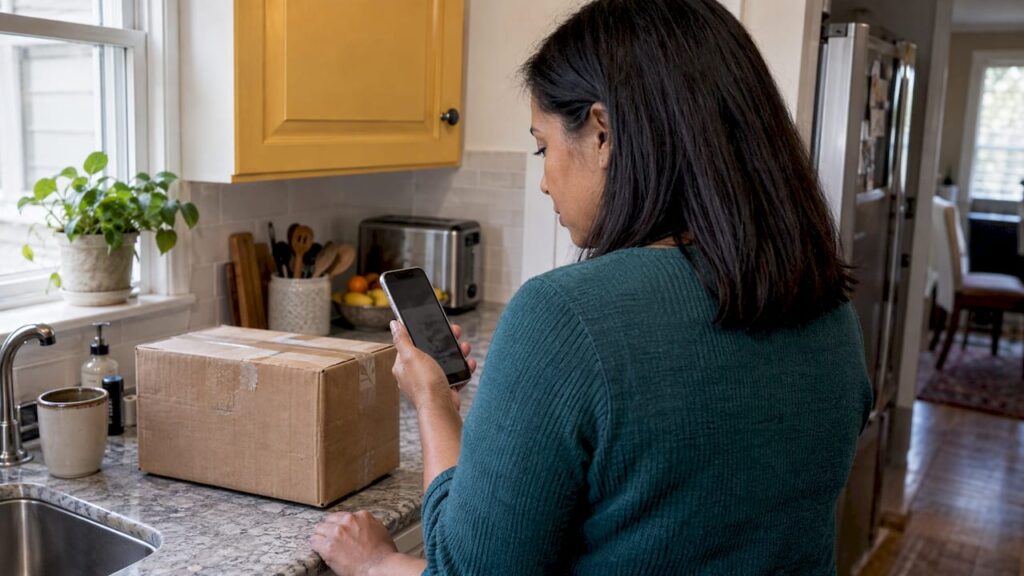
Ecommerce email marketing pays when it is run as a profit program, not a sending schedule. A small set of automated flows (welcome, cart and browse abandonment, post-purchase, winback) does most of the work. Segmentation decides who gets which message. Revenue per recipient tells you whether any of it earns money. Clean authentication and fast unsubscribes keep it all in the inbox. If your store already brings in $25,000 or more a month, email is usually the cheapest place to make the traffic you already pay for work harder. ADM builds and runs email programs like this as part of its email marketing service.
TL;DR
- Email is an owned channel. You pay to bring a shopper to your store once, then email lets you reach them again without paying for the click.
- Build flows first, campaigns second. Welcome, abandoned cart, browse abandonment, post-purchase and winback cover the whole customer journey.
- Judge email by revenue per recipient and profit, not open rates, which are distorted by mail privacy features.
- Keep sender rules tight: authenticate your domain, offer one-click unsubscribe, honor opt-outs quickly and keep spam complaints very low.
- Email and paid media work as one system. The ad buys the first visit, email earns the second and third order.
Table of Contents
- What ecommerce email marketing actually does for a store
- Build the list the right way first
- The flows that carry the revenue
- Campaigns: what to send between flows
- Segmentation and personalization that pay
- Measure revenue and profit, not opens
- US sender rules to follow
- Scaling email without hurting deliverability
- Our perspective
- How ADM can help
- FAQ
- Sources
What ecommerce email marketing actually does for a store
Ecommerce email marketing is the use of email to move a shopper from first visit to first order, then to the second, third and tenth. Every message has one of three jobs: acquire a customer, convert a hesitant one, or retain one you already have.
The reason established brands lean on it is economics. When you scale paid ads, the cost of each new customer tends to rise as you reach colder audiences. Email works on people who already know you. Every subscriber you capture from paid traffic is a visitor you do not have to buy again.
It also connects the whole funnel. A welcome offer turns a first-time visitor into a buyer. A cart reminder rescues a purchase that was nearly made. A post-purchase sequence teaches the customer how to use the product and sets up the reorder. Even the product pages those emails point to matter: if listings carry wrong prices, broken images or out-of-stock items, the emails send shoppers to dead ends, which is why store owners pair email work with ecommerce catalog management software that keeps listings accurate.
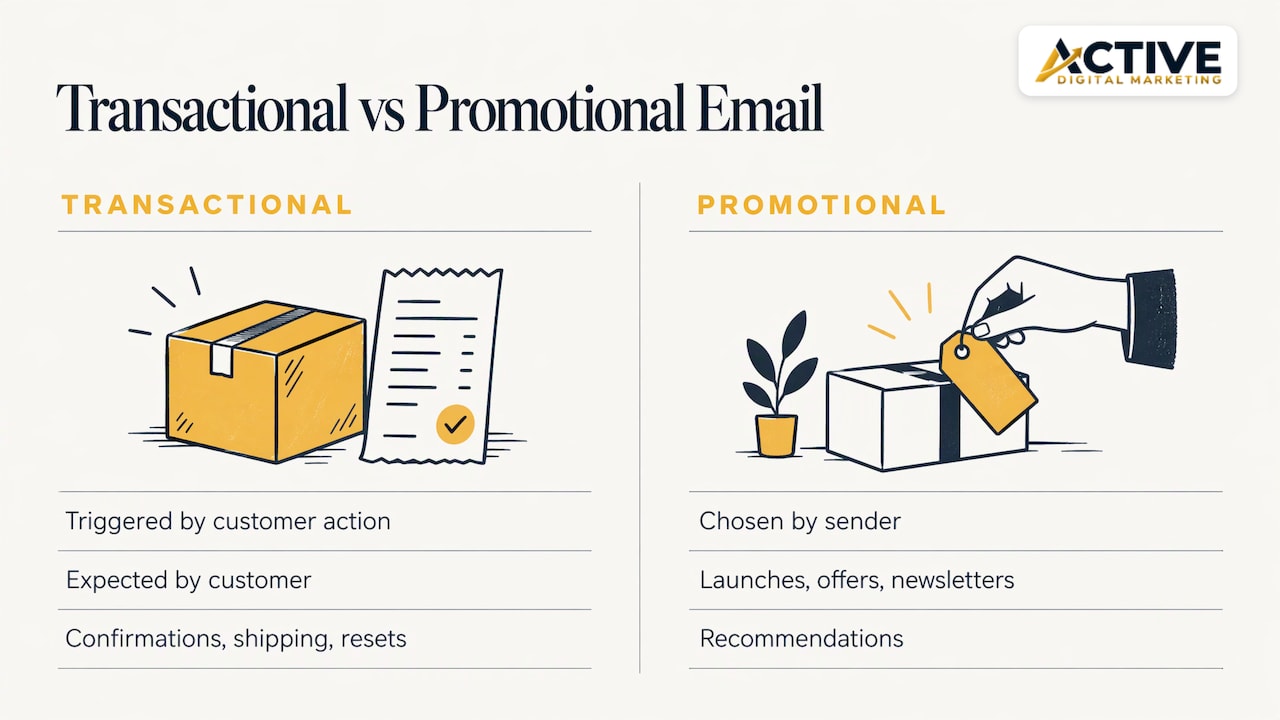
There are two broad kinds of email. Transactional emails are triggered by an action and expected by the customer: order confirmations, shipping updates, password resets. Promotional emails are the ones you choose to send: launches, offers, newsletters and recommendations. Transactional messages get read, so they are a good place for a useful product suggestion, as long as the main purpose stays clear.
Build the list the right way first
Everything downstream depends on a list of people who actually want your email. A smaller engaged list beats a large cold one, because inbox providers watch how recipients react and judge your future mail by it.
Practical ways to grow a quality list:
- A clear offer at sign-up. A first-order incentive, early access to drops or a useful guide gives people a reason to opt in. Say what they will receive and how often.
- Capture at more than one touchpoint. Pop-up or embedded form on high-traffic pages, the checkout, post-purchase pages and landing pages used for paid campaigns.
- Consider double opt-in. A confirmation click filters out typos and bots and gives you a cleaner list, at the cost of a few lost sign-ups.
- Never buy or scrape addresses. Harvesting addresses is treated as an aggravated violation under US law, and bought lists generate the spam complaints that damage your sending reputation.
- Keep the list moving. Lists decay as people change jobs and abandon addresses. The US Chamber of Commerce notes that lists shrink by roughly 28% a year, so list growth is ongoing work, not a one-time project.
In the US, the law does not require opt-in consent before you send commercial email, but it does set rules on how you send (covered below). Asking for clear consent is still the better practice because it produces buyers rather than complaints.
Paid traffic is the fastest way to grow a list. Meta and Google campaigns that send visitors to a landing page with a strong offer can fill the top of your email funnel. ADM runs those campaigns and also builds landing pages, so the sign-up offer and the ad can be designed together.
The flows that carry the revenue
A flow (also called an automation) is a series of emails triggered by shopper behavior, not by your calendar. They run without manual work and reach people at the moment they are most interested. For most stores, five flows do the heavy lifting.
1. Welcome series
The welcome series starts the moment someone subscribes. It has the highest attention you will ever get from that person. A sensible sequence runs three to four emails over about a week:
- Deliver the promised offer and state what makes the brand different.
- Show best sellers or the product that brought them to the site.
- Add proof: reviews, press, guarantees, or a customer story.
- Close with a reminder that the offer is ending.
2. Abandoned cart
Most carts are never completed, so this flow recovers revenue that was already nearly yours. Send the first email within an hour or two, with the product image, price and a direct link back to the cart. A second and third email can follow over the next days with reviews, answers to common objections or a shipping reminder. Reserve discounts for later emails or for shoppers who need them, so you do not train everyone to wait for a code.
3. Browse abandonment
This one targets people who viewed products but never added to cart. It is lighter in tone: recently viewed items, related products, a link back. It generally earns less per send than a cart reminder but reaches a much larger audience.
4. Post-purchase
After an order, the customer is at their most receptive. Confirm the order, set shipping expectations, show how to use or style the product, then ask for a review and suggest a complementary item. For consumables, time a replenishment reminder to when the product runs out.
5. Winback
When a customer goes quiet, a winback sequence tries to bring them back. Timing depends on your purchase cycle: a brand selling coffee will define “lapsed” far sooner than one selling furniture. Start with a reminder and new arrivals, escalate to an offer if needed, and, if there is still no response, stop sending.
Two more flows are worth adding when your catalog fits: back-in-stock alerts for sold-out items and VIP or loyalty emails with early access. More flows beat more complicated flows. Get the basics working and measured before you add branching logic.
Campaigns: what to send between flows
Campaigns are the one-off sends: launches, sales, newsletters, restocks, seasonal moments. They matter because they keep the brand present and drive spikes of revenue. They tend to be less efficient per recipient than flows, because they reach people at a time you picked, not a time they showed interest.
Three habits keep campaigns profitable:
- Send to engaged segments first. Most sends should go to people who opened or clicked recently. A broader send to everyone can be used sparingly.
- Give each campaign one job. One offer, one main call to action, one product story.
- Plan the calendar around margin. Promote products that can carry a discount, and protect your best-margin items from blanket promotions.
Segmentation and personalization that pay
Segmentation just means sending different messages to different groups. You do not need dozens of segments. A workable starting set for an established store:
| Segment | Who | What to send |
|---|---|---|
| High-value customers | Top spenders, frequent buyers | Early access, new arrivals, no discounts |
| Repeat buyers | Two or more orders, recently engaged | Cross-sells, loyalty perks |
| First-time buyers | One order, recently active | Education, replenishment, reviews |
| At risk | No purchase for a few months | Winback with a reminder, then an offer |
| Lapsed | Long inactive | A last attempt, then suppress |
The thresholds depend on how often your customers naturally reorder. Look at your own repurchase timing before you set them.
Personalization goes beyond a first name. Recommendations based on browsing, content based on the last product purchased, and send timing based on past behavior all raise relevance. Test one variable at a time (subject line, offer, layout, send time), let each test reach enough people to mean something, and record what you learn.
Measure revenue and profit, not opens
Open rates have become unreliable. Apple’s Mail Privacy Protection preloads emails, so many “opens” are machine activity, not people. Treat opens as a rough signal at best. The metrics that hold up:
- Revenue per recipient (RPR): attributed revenue divided by emails delivered. It is the single best summary of what a send was worth.
- Click-to-conversion rate: of the people who clicked, how many bought.
- Unsubscribe and spam complaint rates: the cost side. A send that earns revenue but drives unsubscribes and complaints may be borrowing against future revenue.
- List growth rate: net new subscribers after removals.
- Repeat purchase rate and customer lifetime value: the real reason you do email.
A worked example: a campaign delivered to 40,000 people produces $6,000 in attributed revenue. RPR is $6,000 divided by 40,000, or $0.15. If the same list’s welcome flow earns noticeably more per recipient, that tells you where to invest effort first.
There are two traps. First, attribution: email often gets credit for orders that would have happened anyway, such as a customer who was about to buy and clicked a promo on the way. Compare segments, and compare against a holdout group that did not receive the message, where your volume allows. Second, revenue is not profit. Subtract product cost, discounts, shipping and the cost of running the program. That is the same discipline we apply to ads: ADM’s break-even ROAS calculator shows what return a campaign needs before it makes money, and the same thinking applies to a discount-heavy email.
US sender rules to follow
Two layers of rules apply: the law and the inbox providers.
The law. The CAN-SPAM Act is enforced by the FTC. Under its compliance guide for business, commercial email must not use misleading headers or subject lines, must include your valid physical postal address, must clearly offer a way to opt out, and opt-out requests must be honored within 10 business days. Penalties are assessed per violating email, so these basics matter.
The inbox providers. Gmail and Yahoo introduced bulk sender requirements in 2024, and Microsoft followed. Under Google’s sender guidelines, anyone sending 5,000 or more messages a day to Gmail accounts must authenticate with SPF, DKIM and DMARC, offer one-click unsubscribe on marketing mail, and keep spam complaint rates under 0.30%. Google recommends staying well below that, around 0.10%.
In practice:
- Authenticate your sending domain before you scale volume.
- Put a visible unsubscribe link in every promotional email and make it work immediately.
- Suppress people who have not engaged in a long time. The right window depends on your cadence: daily senders need a short one, monthly senders can wait a few months.
- Increase send volume gradually when you add a new list or a new sending domain.
Scaling email without hurting deliverability
Growth is where programs get into trouble. A brand doubles its ad spend, the list grows quickly with colder subscribers, and campaign volume rises to match. Complaint rates climb, inbox placement falls and revenue per send drops.
Protect the program as you scale:
- Send most campaigns to recently engaged subscribers and reach wider only occasionally.
- Add flows before you add campaigns. Flows send to people at the right moment, so they generate fewer complaints per dollar earned.
- Watch complaint and unsubscribe rates by segment, not just overall.
- Make sure the ads, the sign-up offer and the emails say the same thing. A mismatch between promise and follow-up is a common source of unsubscribes.
Our perspective
Most stores treat email as a discount machine. Send a sale, watch the revenue number, repeat. We see a different job for it: email is where the money you spend on paid media earns its second and third return.
Our approach to paid media is built around profit rather than activity, and email is held to the same standard. A flow that adds revenue but only by giving away margin is not a win. So we look at which segments buy at full price, which need an incentive, and which should not be emailed at all.
The brands that benefit most are the ones already spending on ads and generating steady revenue. They have traffic, they have a customer base, and they have data. Connecting the ad account, the site and the email program lets each one inform the others, and that is where senior attention matters: someone has to decide what the numbers mean for margin.
Mitch Lawrence
How ADM can help
If you want email that works alongside your paid media, ADM offers email marketing as part of its services, with senior-level personnel handling client accounts directly. It sits next to sales funnels, landing pages, copywriting and managed ad campaigns, so sign-up offers, ads and follow-up emails can be planned together.
If you are not sure where your current spend is leaking, start with an ad account audit or ad spend leak audit. To see everything ADM handles, visit the services page.
FAQ
How much of a store’s revenue should come from email?
There is no universal target, because it depends on your category, repurchase cycle and how much you rely on paid traffic. Track the share of revenue attributed to email and flows over time, and compare segments against each other. If the share is rising while profit per order holds, the program is healthy.
Which email flow should I build first?
Start with the welcome series and abandoned cart. The welcome series converts new subscribers while their interest is highest, and abandoned cart recovers sales that were nearly complete. Add browse abandonment, post-purchase and winback once those two are running and measured.
Do I need permission before emailing customers in the US?
US law does not require opt-in before you send commercial email, but it does require an honest sender identity, your postal address and a working opt-out honored within 10 business days. Collecting clear consent anyway gives you a more engaged list and fewer spam complaints, which protects your delivery.
What is a good way to tell if email is working?
Use revenue per recipient, click-to-conversion rate, unsubscribe rate and repeat purchase rate. Skip open rate as a headline number, since mail privacy features inflate it. Where possible, compare against a group that did not receive the email to see the revenue it truly added.
Can email help me get more from my ad spend?
Yes. Every visitor your ads bring who joins your list can be marketed to again without another click cost. That lowers your blended cost of acquiring and keeping customers, and it is the reason we plan ads and email as one system.
Sources
- US Chamber of Commerce: How to build and manage an email marketing list
- FTC: CAN-SPAM Act compliance guide for business
- Google: Email sender guidelines